
EIA Notification 2006, Project Categories That Require Environmental Clearance
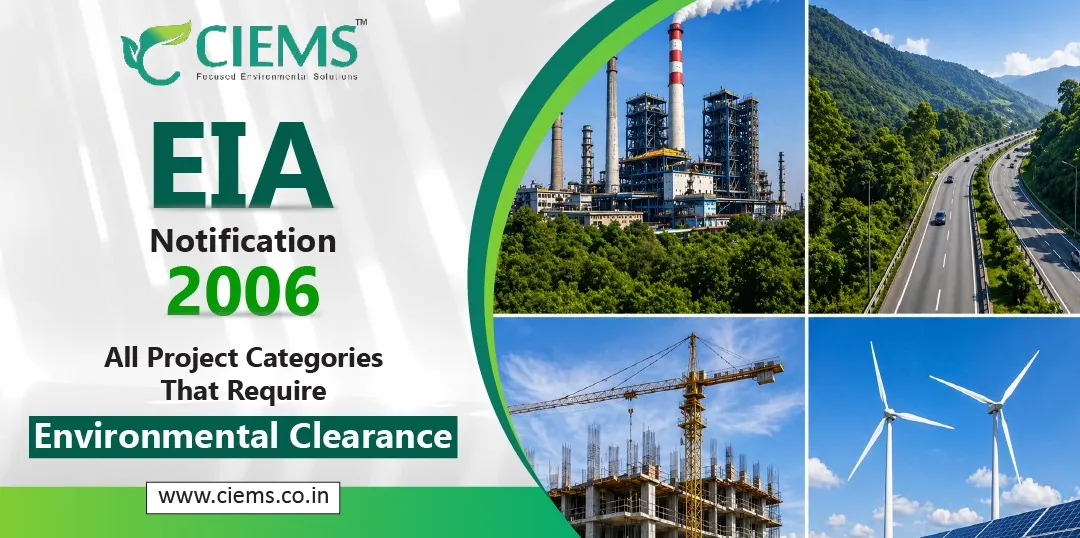
Understanding the importance of EIA Notification 2006, for Sustainable development
The Environmental Impact Assessment (EIA) Notification 2006, is one of India’s most critical environmental regulations, created to ensure that development projects proceed responsibly without causing irreversible ecological harm. Issued under the Environment Protection Act, this notification mandates prior environmental clearance for specific projects before construction, expansion or modernization begins. For Industries, Infrastructure developers and construction companies, understanding EIA requirements is not just about legal compliance—it is a strategic necessity for sustainable business growth.
At its core, the notification is designed to evaluate how projects may impact land, water, air, biodiversity and nearby communities. By introducing environmental assessments, public consultations, and regulatory approvals, the framework helps minimize environmental degradation while supporting industrial and economic progress. For businesses navigating this complex process, experienced environmental consultants like CIEMS play a vital role in simplifying compliance. Established in 2016, CIEMS specializes in end-to-end environmental regulatory services, including Environmental Clearance (EC), Environmental Impact Assessments (EIA), legal compliance support, and customized STP/ETP solutions, helping industries across Gujarat and neighboring states achieve sustainable expansion.
Project categories included under EIA Notification 2006
The EIA Notification categorizes projects based on their environmental risk and scale into Category A and Category B, ensuring that projects with higher environmental sensitivity undergo more detailed scrutiny.
Category-A Projects:
Category A projects are large-scale developments with substantial environmental implications and require approval directly from the Ministry of Environment, Forest and Climate Change (MoEFCC). These projects often involve major Industrial or Infrastructure sectors, such as:
- Large Mining and Mineral extraction projects
- Thermal power plants
- Cement manufacturing units
- Petroleum refineries
- Chemical processing industries
- Airports
- National highways
- Ports and Harbors
Because of their potential for widespread environmental impact, these projects require detailed EIA reports, expert appraisal, and public consultation.
Category-B Projects:
Category B projects are assessed at the state level through the State Environment Impact Assessment Authority (SEIAA). They are further divided into:
- B1 Projects: Require comprehensive EIA studies and public hearings
- B2 Projects: Require environmental clearance but may not need full-scale EIA documentation
A key factor to remember is that projects located near protected areas, interstate boundaries, or eco-sensitive zones may be upgraded to Category A due to increased environmental risks.
Sector-wise list of Projects requiring Environmental Clearance
The EIA Notification 2006 covers 39 major categories of projects across multiple sectors.
Mining and Mineral Extraction
Mining projects, including coal, minerals, quarrying and offshore drilling, require environmental clearance because of their potential impact on Ecosystems, Forests and Groundwater resources.
Energy and Power Projects
Large thermal Power plants, Hydroelectric projects and Nuclear facilities are regulated due to emissions, land transformation, and water consumption concerns.
River Valley and Infrastructure Projects
Projects such as Dams, Irrigation systems, Hydroelectric plants and flood control systems require environmental assessment because of their influence on biodiversity and water systems.
Construction and Township Development
Construction projects exceeding specific thresholds, including large townships, commercial developments, and industrial parks, require environmental clearance.
Manufacturing and Industrial projects
Industries like Pharmaceuticals, Fertilizers, Petrochemicals, Chemicals and Metallurgical units require approvals due to pollution and waste generation potential.
Transportation Infrastructure
Major Roads, Expressways, Ports, Airports and Inland waterways also fall under the EIA framework.
Sector | Examples | Clearance Category |
Mining | Coal, quarrying, drilling | A/B |
Energy | Thermal, hydro, nuclear | A |
Construction | Buildings, townships | B |
Manufacturing | Chemicals, cement | A/B |
Infrastructure | Highways, airports, ports | A |
How CIEMS supports Environmental Clearance and Compliance
Navigating environmental regulations can often feel overwhelming for project developers. This is where CIEMS provides strategic value through specialized consulting services. The company offers complete support for:
- Environmental Clearance applications
- EIA studies and report preparation
- Consent to Establish (CTE) and Consent to Operate (CTO)
- CGWA approvals
- Hazardous waste authorizations
- Sewage and Effluent Treatment Plant design and implementation
With expertise spanning sectors like Infrastructure, Manufacturing, Pharma, Chemicals and Real Estate, CIEMS ensures faster approvals, streamlined documentation and effective regulatory coordination. Their ISO-certified environmental services position them as a trusted partner for businesses seeking responsible and legally compliant growth.
Environmental Clearance process under, EIA Notification 2006
The approval process follows several structured stages:
- Screening: Categorization of the project
- Scoping: Defining Terms of Reference
- Environmental Impact Assessment: Detailed environmental study
- Public Consultation: Community participation
- Expert Appraisal: Review by regulatory committees
- Final Approval: Environmental clearance decision
This systematic process ensures that environmental safeguards are integrated early in project planning, reducing long-term legal, financial and operational risks.
Conclusion
The EIA Notification 2006, serves as the backbone of environmental governance in India, ensuring that projects across sectors are developed responsibly while protecting ecological balance. From mining and manufacturing to real estate and infrastructure, understanding which project categories requires environmental clearance is essential for smooth execution and compliance right from the very first step.
For businesses looking to navigate these regulations effectively, expert firms like CIEMS provide comprehensive environmental consulting, compliance management and treatment solutions that support both industrial progress and environmental sustainability. In an era where responsible development is no longer optional, partnering with experienced consultants can make the difference between regulatory delays and successful project completion.